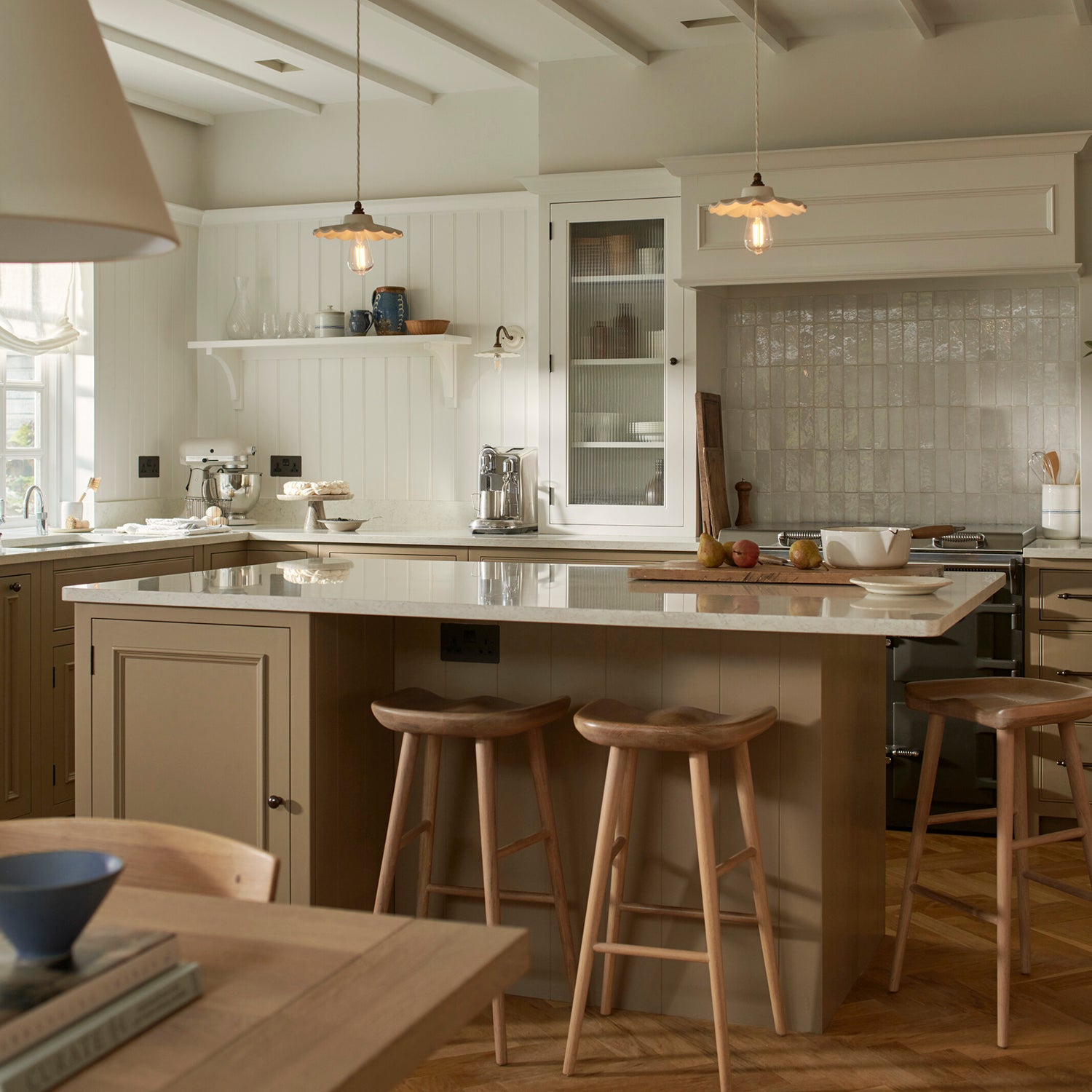
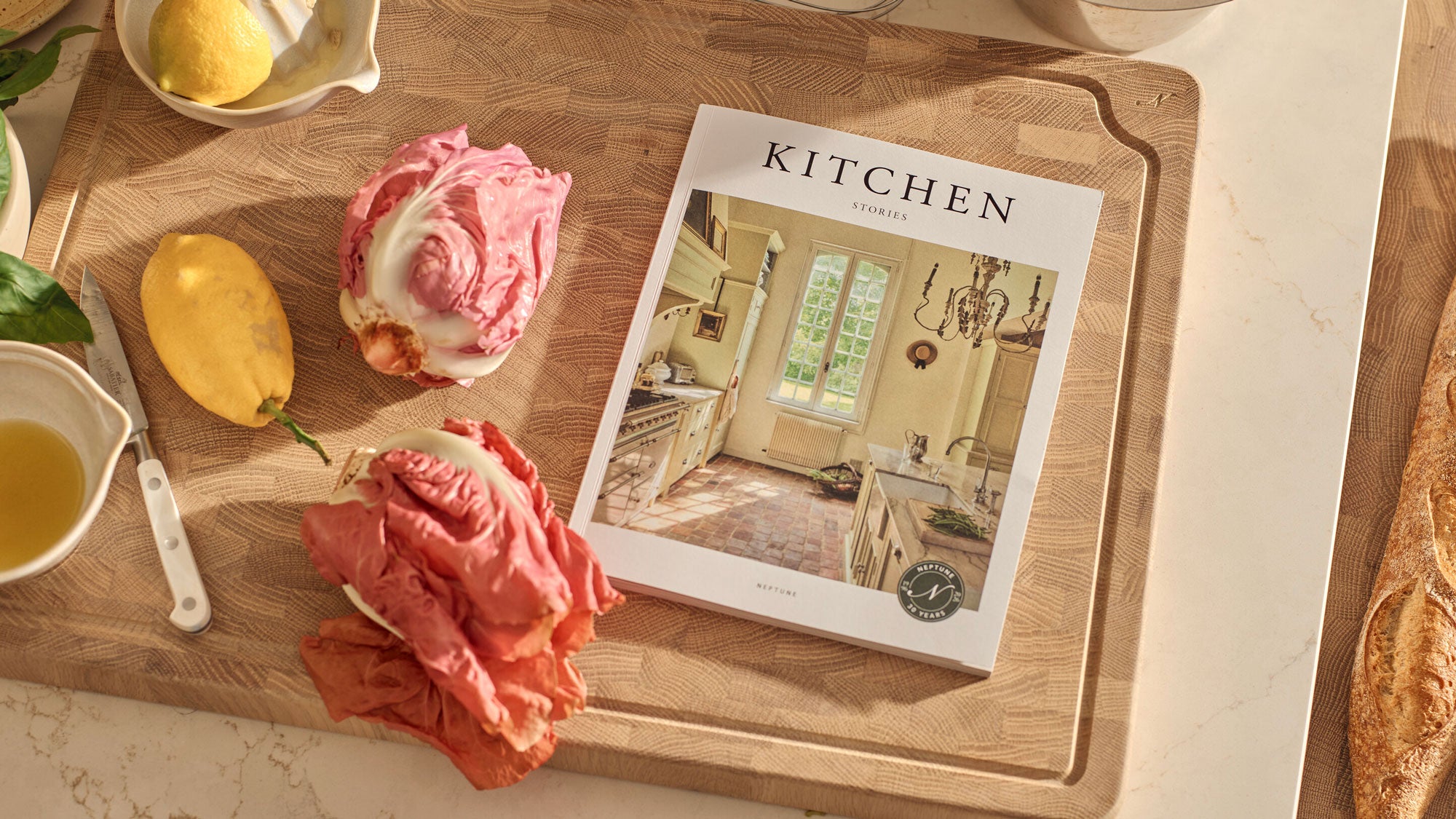
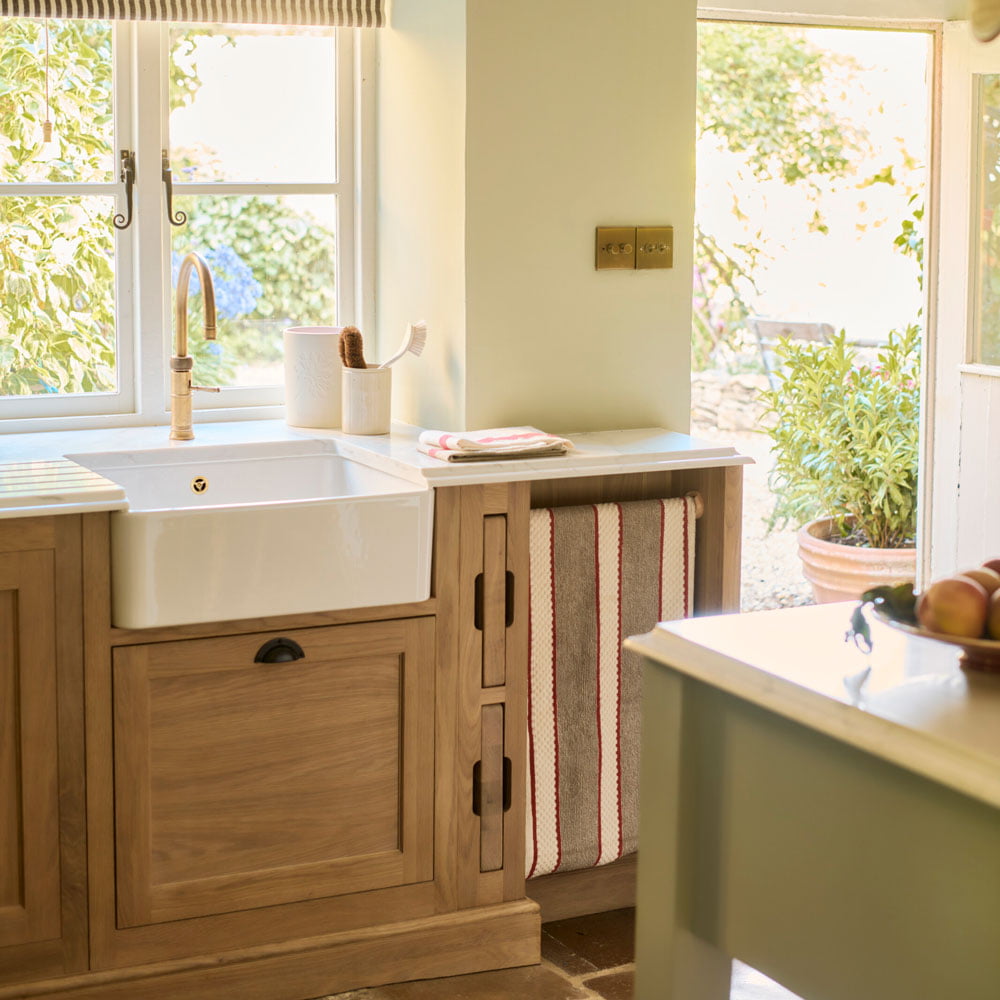
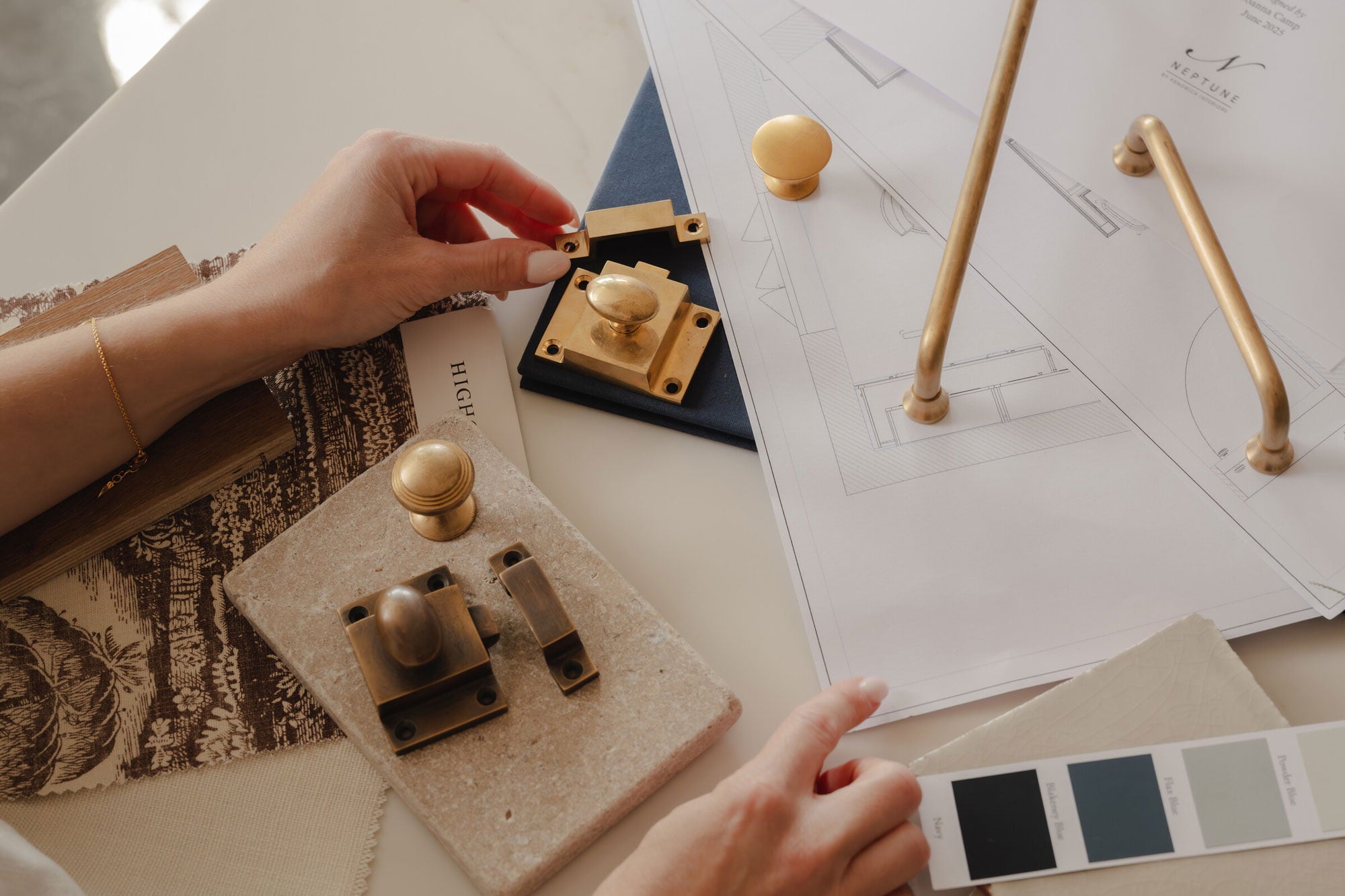
An open-plan kitchen transforms how you live at home. By opening up the space between cooking, dining and living, these layouts encourage a more seamless way of living, where family life can unfold without interruption. Yet, achieving a successful open-plan kitchen requires more than simply knocking down walls – it demands thoughtful planning, clever zoning strategies, and a clear understanding of how the space will work for your daily routine.
The beauty of an open-plan kitchen lies in its flexibility. Whether you're working with a generous room that can accommodate distinct zones for cooking, dining and relaxing, or a more compact footprint that needs careful consideration, the key is creating a layout that balances openness with purpose. Light, flow and functionality should work together seamlessly, while storage solutions and furniture placement help define different areas without closing them off.
Below, our design director, Fred Horlock, shares the principles behind successful open-plan kitchens, followed by three proven layout ideas that work for different spaces and lifestyles. From generous entertaining kitchens to compact, cleverly zoned designs, discover how thoughtful planning can create a kitchen that truly works for you, drawing together practical open-plan kitchen ideas for different spaces and lifestyles.
What makes an open-plan kitchen layout successful?
The success of an open-plan kitchen depends on how well you balance openness with definition. A considered open kitchen design relies on careful zoning to give each area its own identity while maintaining flow. Without walls to naturally separate spaces, those zones help guide how the room is used from day to day.
Storage plays a crucial role here. In open-plan layouts, functional storage allows the kitchen to be part of the living space without overwhelming it. Look for hard-working cabinetry such as drawers within drawers, slots for chopping boards, and clever solutions that keep worktops clear when everything is on display.
Consider how people will move through the space. As Fred explains, ‘You can zone your storage and cleaning areas with a pantry and utility, or you might want to incorporate two sinks into the plan: a prep one and one that is more tucked away. Just remember that the 'walk-in' feel is also important, so don't zone for the sake of it – there are always alternative ways to solve a layout.’
The three layouts below show proven approaches to open-plan kitchens with different requirements and footprints.
Layout 1
Open-plan rooms can be generous and airy, but don't feel the need to fill every inch of wall space with fitted cabinetry. This roomy layout enables keen cooks to maximise storage and prep areas and introduce flexible pieces like an extending dining table. Use furniture and rugs to define the different areas clearly.
This approach works particularly well if you entertain regularly or have a busy family household. An extending dining table offers flexibility for everyday meals and larger gatherings without permanently claiming too much floor space. Position rugs strategically to anchor the dining area or create a cosy sitting zone, visually separating spaces without building barriers.
If you entertain often, consider where guests will naturally congregate. Keep worktop clutter to a minimum with plenty of closed storage and think carefully about your island placement. As Fred advises, avoid installing a sink in a central island to help social areas remain calm and considered.

Layout 2
A symmetrical floorplan, with the dining table at the centre, helps the room feel balanced and calm. You can change the pace with shortened stud walls (‘nibs’) or even a bank of high bookcases to create a dual-use room with a cosy living area away from the kitchen action.
This layout is ideal for a modern open-plan kitchen, where the space needs to serve multiple purposes throughout the day – a family breakfast zone in the morning, a quiet working space at lunchtime, and an entertaining area in the evening. The symmetry creates visual calm, while the gentle divisions allow different activities to happen simultaneously without one overwhelming the other.
Nibs and bookcases offer a softer alternative to full walls, providing just enough separation to define spaces whilst maintaining flow and connection. A tall bookcase can subtly transition between zones, holding practical kitchen items on one side and more personal pieces on the other.
The centred dining table becomes the heart of this layout, equally accessible from the kitchen and the living areas. Consider the table's shape carefully – oval or round tables work beautifully here, softening the symmetry and making the room feel more approachable.

Layout 3
Tuck domestic elements out of the way by building a pantry or utility room so the remaining kitchen space can be focused on relaxing, entertaining and socialising. A circular dining table works well in a smaller footprint and softens the flow of the room. Adding bi-fold doors will connect the inside and outside.
This layout is particularly effective for smaller open-plan kitchen spaces where every square metre counts. By hiding away the washing machine, cleaning supplies and everyday clutter behind closed doors, you free up the visible kitchen area to feel more like a living space.
The circular dining table is a clever choice here. It takes up less visual space than a rectangular equivalent, allows easier movement around it, and creates a more intimate dining experience. There are no awkward corner seats, and the curved shape naturally softens what might otherwise feel like a boxy room.
Connecting to outdoor space through bi-fold or large sliding doors is transformative in a smaller kitchen. It extends your usable area during warmer months and floods the interior with natural light year-round, making the space feel significantly larger than its actual dimensions.

Choosing the right layout for your space
The three layouts above offer different solutions, but which is right for you? If you're a family with children doing homework whilst you cook, or you regularly host dinner parties, the first approach gives you the space and flexibility you need. If you value calm and order, with distinct zones for different times of day, the symmetrical layout might suit you better. And if you're working with a more compact footprint, the third layout shows how clever zoning and outdoor connections can make a smaller space feel bigger.
Beyond choosing the overall layout, there are practical design principles that will help your open-plan kitchen succeed. Fred shares his essential considerations below.
Fred’s Design Tips
- Imagine your dream kitchen, regardless of your actual space. You can then identify what elements are important to you and work them into your plan while letting go of the less key aspects.
- Keep the areas around architectural details free. For example, don’t butt cabinetry right up to a chimney breast; give it room to breathe. It will have a big impact on the room’s sense of space.
- Spring-clean your cupboards to identify what storage you really need. Why build cabinetry to store bulky items that you never use when you could free up and decorate the area to enhance the feel of the kitchen?
- Too many heavy cabinets or too much busyness above the worktop can make a room feel oppressive, so mix in open shelving with glass-fronted wall
cabinets, and embrace plain wall space as a spot to display art.
- Consider where you position your sink. Unless you’re super tidy, sinks will be messy areas, so you might not want it in the middle of your social island.
- If you don’t have a utility room, consider relocating your washing machine and dryer to a downstairs loo or landing cupboard.

Creating a successful open-plan kitchen is about understanding how you live and selecting open-plan kitchen ideas that support that reality. The layouts and principles Fred has shared here draw on over twenty years of Neptune kitchen design experience, creating thoughtful open-plan kitchen designs that balance flow, function and longevity. Each one is different because each family is different, but the fundamentals remain the same: thoughtful planning, quality materials that last, and furniture that works beautifully.
If you're planning an open-plan kitchen, our Kitchen Design Service can help you create a layout that balances style, function and the timeless quality Neptune is known for.
To book one of our in-store design services or to schedule a free one-to-one appointment to explore our designs, simply fill out the form here.