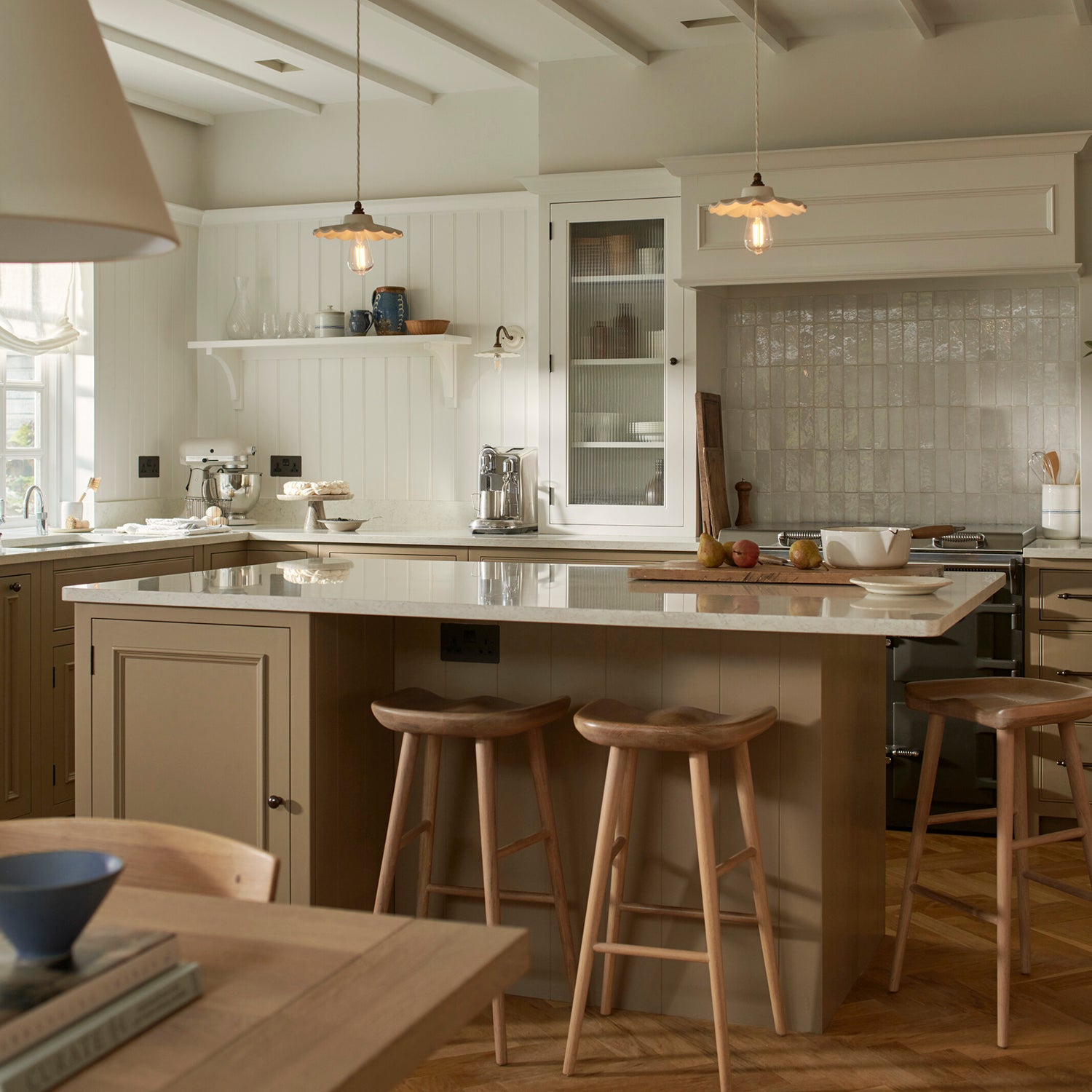
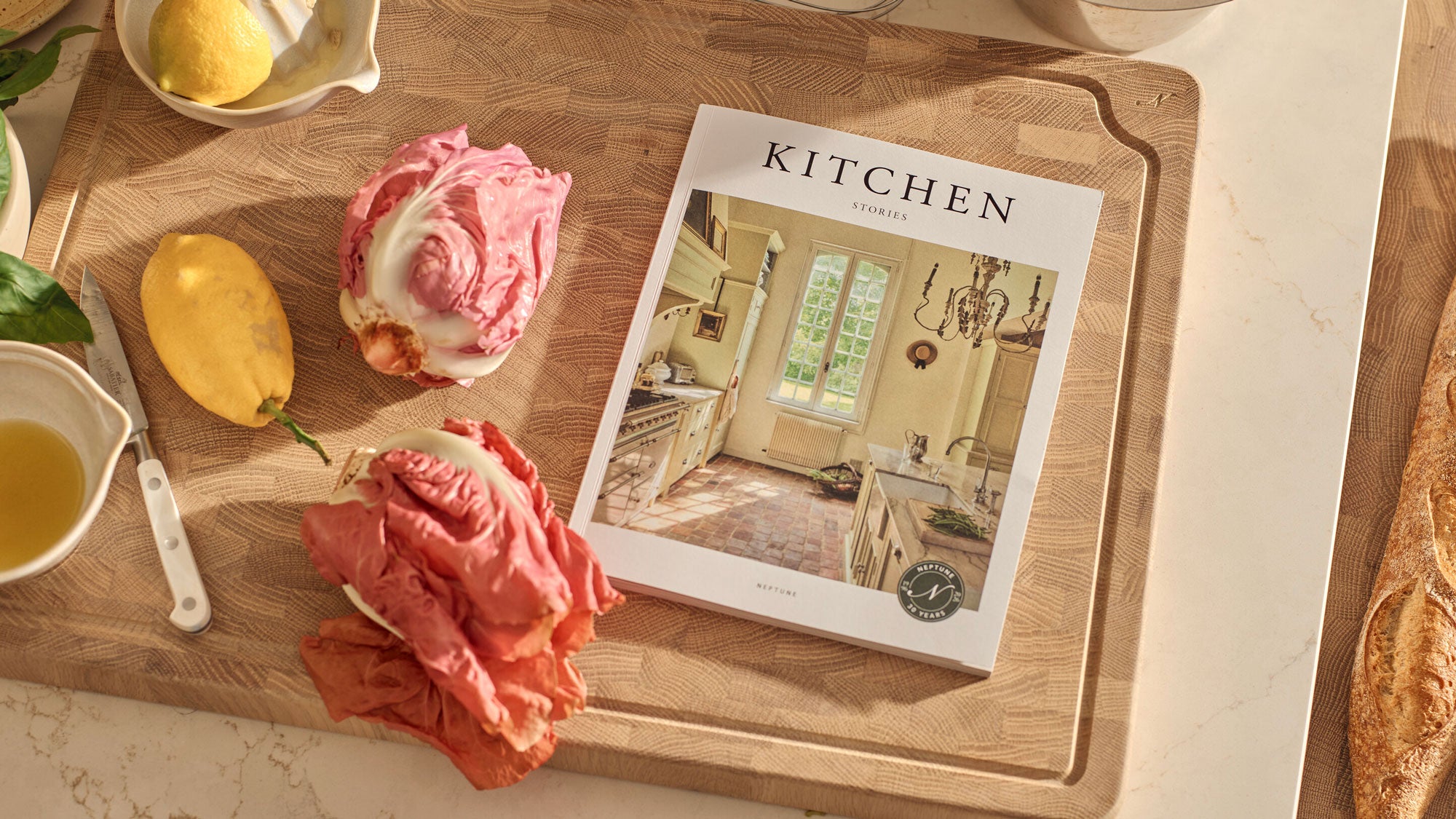
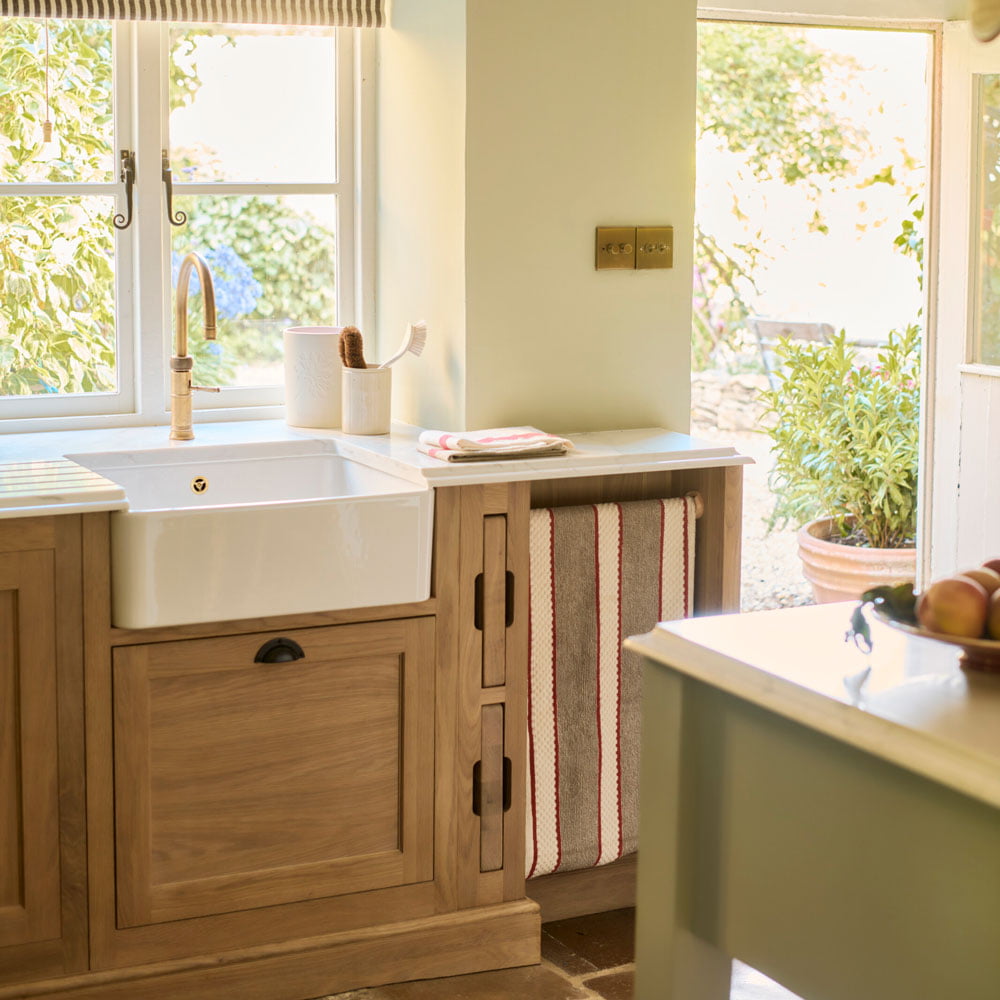
A Shaker kitchen is characterised by its simple, clean-lined cabinetry, with flat, recessed panels set within square-edged frames. This understated style has remained popular for over two centuries because of its emphasis on craftsmanship, natural materials and functional design.
Shaker design is often reduced to a look, most commonly pale cabinetry paired with timber worktops. The style is defined far more by purpose than by appearance. As Hannah, kitchen design specialist at Neptune, explains, ‘what people often describe as Shaker isn’t always quite right. What Shaker’s really about is purpose, nothing is there just for decorative detail.’
The appeal runs deeper than appearance alone. A well-designed Shaker kitchen is defined by its craftsmanship, the weight and feel of solid timber doors, the precision of the joinery, and proportions that have been refined rather than reinvented. These qualities create a kitchen that feels settled and enduring, designed to support everyday life rather than follow passing trends.
This guide explores what makes this design special, from its origins and defining features to modern interpretations that suit contemporary homes. Discover how a Shaker kitchen stands the test of time.
The origins and history of Shaker kitchen design
Shaker kitchens take their name from the United Society of Believers, a religious community that emerged in England in the mid-eighteenth century before settling in America. Their approach to furniture was guided by a belief that usefulness and beauty were inseparable, with every element designed to serve a clear purpose rather than provide decoration for its own sake.
Cabinetry was made from solid timber, using robust joinery such as mortise-and-tenon construction and framed doors with recessed panels, chosen for strength, balance and longevity. These practical, well-proportioned designs resisted changing fashions and have remained largely unchanged for more than two centuries, which is why Shaker kitchens continue to feel relevant in homes today.
The Suffolk kitchen reflects many of these original principles, from its pared-back framing to its use of natural timber.


Key characteristics of a Shaker kitchen
Several features define the style. While details vary between makers, these core characteristics remain consistent.
The framed door construction
A Shaker door uses rails and stiles to create a balanced frame around a recessed panel. This construction provides strength and stability, helping to prevent warping over time. In well-made kitchens, solid timber interiors give the cabinetry a reassuring weight and sense of quality when opened.
Simple lines and symmetrical proportions
The design favours clarity. Doors align neatly, drawers sit flush, and elements repeat consistently throughout the cabinetry. The overall appearance is unfussy, which allows the craftsmanship to stand out.
Natural materials
Timber is central to the design. Whether left natural or finished with a hand-painted eggshell, it brings warmth and depth to the space. Solid timber interiors and traditional dovetail joints remain reliable markers of quality and longevity.
Understated hardware
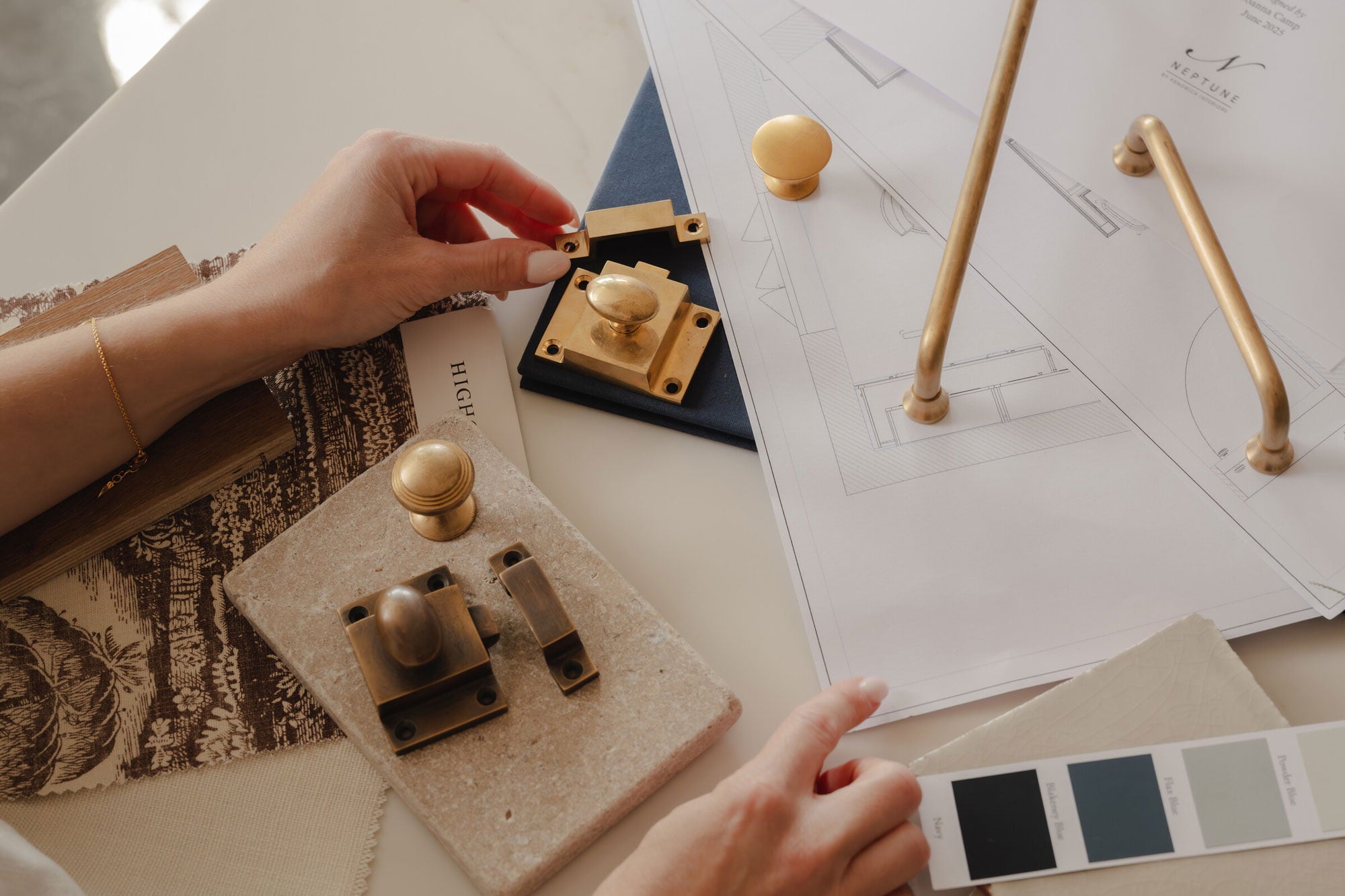
Hardware is typically modest in scale and shape. Intricate or decorative detailing is avoided in favour of simple knobs, cup handles or slim pulls that reinforce the overall restraint of the design.
Practicality first
These kitchens are designed to be used. Drawers glide smoothly, cabinets offer generous storage, and layouts are planned to support everyday life.
Beauty comes from how well the kitchen performs rather than how ornate it appears, creating a sense of order and calm in what is often the busiest room in the home.
Why Shaker kitchens have remained so popular
This style feels timeless because it is built on principles that do not date. Its simplicity allows it to adapt easily, sitting comfortably in both period homes and modern spaces, positioned between traditional and contemporary design.
As Hannah, kitchen design specialist at Neptune, explains, ‘although it’s essentially a classic design, it doesn’t rely on ornate mouldings or heavy detailing. That means it can be visually transformed with very little effort, using colour, materials or hardware, while retaining its core character.’
Durability is another reason for the style’s longevity. When constructed with solid timber, robust joinery and painted finishes that can be refreshed over time, a Shaker kitchen becomes a long-term investment.
This approach appeals to homeowners who want a kitchen that will age gracefully rather than follow seasonal trends.
Our lifetime guarantee on kitchens reflects this same belief in longevity and careful craftsmanship.
Shaker vs traditional kitchen styles
The distinction between these two styles lies largely in the level of detail. Traditional designs often feature raised panel doors, decorative mouldings and more ornate cornices or skirting. They lean towards heritage aesthetics, with craftsmanship that is intentionally expressed rather than restrained.
The Shaker alternative removes these embellishments. Door panels are flat rather than raised, edges are crisp, and lines remain uninterrupted.
This creates a cleaner silhouette that suits a broader range of interiors. Both styles are rooted in craftsmanship, but Shaker design prioritises simplicity and function, while traditional kitchens allow for more expressive detail.
If you prefer an understated look, Shaker design often feels the more natural choice. If your home features period detailing that you wish to echo, a traditional kitchen may be the better match.


Modern interpretations of Shaker kitchens
Modern interpretations retain the original clarity of Shaker design while introducing subtle, considered updates. Colour often plays a key role, with deeper blues, greens and soft neutrals sitting alongside lighter, traditional tones. Contemporary hardware, such as slim brass pulls, can add refinement without disrupting the overall restraint of the cabinetry.
Layout and materials also influence how the style is read. Cabinetry may extend higher to create clean architectural lines, while open shelving, integrated lighting or streamlined work surfaces introduce a more modern feel. Although the structure remains timeless, choices such as worktops, flooring and appliances can gently shift the kitchen towards a contemporary or more traditional interpretation.
This ability to evolve is part of the style’s enduring appeal. Clean lines and a lack of ornate detail mean Shaker kitchens are not tied to a specific era, allowing well-designed spaces to remain relevant for decades, particularly when refreshed with new colours or hardware.
Quality kitchens balance these elements carefully, maintaining traditional proportions while incorporating contemporary finishes and integrated appliances that suit both period and modern homes.
Our Suffolk collection reflects this evolution, combining solid oak construction with contemporary paint options. To see how the same kitchen design adapts across different settings, explore our guide to one kitchen, three homes.
Styling your Shaker kitchen
Styling a Shaker kitchen is less about adding decoration and more about interpreting its principles in a way that suits your home and lifestyle.
Within its clarity and balance, there is room to shape the space, so it feels distinctly your own. Thoughtful choices in colour, materials and hardware can gently shift the design from classic to contemporary, without introducing unnecessary ornamentation.
Colours and paint finishes
Colour plays a significant role in how a Shaker kitchen is perceived today. As Hayley, Neptune designer, explains, ‘paler, gentler shades such as soft beiges, mushrooms and greys feel timeless and classic, while darker blues, greens or charcoal finishes create a more contemporary mood, without losing the simplicity of the cabinetry.’
One of the strengths of a handmade, hand-painted kitchen is its versatility. As Hannah notes, ‘you can be more expressive with areas like an island, choosing a brighter or more fashion-led shade, while keeping the rest of the kitchen calm and balanced.’ Using deeper tones selectively adds contrast and character, while lighter perimeter cabinetry helps the space feel settled and enduring.
Neptune’s interior paint collection reflects this approach, offering a considered palette designed to work harmoniously with Shaker cabinetry and natural materials.
Hardware that defines the character
Hardware plays an important role in shaping how a Shaker kitchen feels. Traditional choices such as simple knobs and cup handles in pewter or nickel give a classic, understated look, while slimmer pulls in brass or matt black introduce a more contemporary note.
Hardware should complement rather than dominate. Its purpose is functional, but the finish and shape help draw out either the softness or structure of the cabinetry. The key is restraint.
Worktops and surfaces
Worktops and surfaces have a significant influence on the overall feel of a Shaker kitchen. Timber worktops such as oak or walnut add warmth and texture, while natural stone brings subtle variation and a sense of permanence. Engineered quartz offers durability and consistency for modern living. Details such as edge profiles also matter, with rounded edges feeling softer and more traditional, and crisp square profiles lending a more contemporary finish.
Flooring that grounds the space
Flooring provides the foundation for the room. Engineered oak planks introduce warmth and emphasise natural materials, while stone or ceramic tiles offer practical, timeless options across both traditional and modern interiors.
Whichever material you choose, it should feel authentic and substantial, complementing the cabinetry without competing for attention.
Furniture and seating
Traditional Windsor or ladderback chairs honour the heritage, while contemporary oak chairs and upholstered styles can create interesting contrasts. Bar stools around a kitchen island might echo the design with turned legs and simple proportions, or contrast with sleek modern silhouettes.
Our Suffolk furniture collection extends the aesthetic beyond cabinetry to dining tables, benches and storage pieces, creating a cohesive look throughout your space.
Finishing touches
Shaker style responds well to layers of texture and thoughtful, purposeful detail. Open shelving and peg rails, originally developed by the Shaker communities, keep everyday items close at hand while allowing the space to feel lived in rather than styled. Natural elements, simple textiles and functional objects, from wooden boards to ceramic jars, add warmth without clutter.
Lighting plays an important role, too. Warm task lighting and subtle pendants help highlight the cabinetry’s clean lines and create a gentle atmosphere as the day draws to a close. The guiding principle remains the same: if something doesn’t serve a purpose, it doesn’t earn its place. The result is a kitchen that feels both practical and welcoming.

Choosing a Shaker kitchen: practical considerations
When selecting a Shaker kitchen, several details will help you understand its quality.
The construction
Look for solid timber frames, dovetail joints and cabinet interiors crafted from solid timber rather than composite materials. These details indicate a kitchen designed for long-term use.
While quality construction comes at a higher cost than flat-pack alternatives, it represents better value over time. Solid timber frames, hand-painted finishes and traditional joinery require skilled craftsmanship and superior materials, delivering longevity that mass-produced options cannot match.
In-frame vs overlay
An in-frame kitchen has doors that sit within the cabinet frame, requiring precision craftsmanship and offering a more traditional appearance. Overlay doors sit on top of the frame and create a slightly more contemporary feel. Both approaches can suit a Shaker-style kitchen, depending on personal preference. At Neptune, Shaker-inspired kitchens are built using in-frame cabinetry.
Painted finishes
A hand-painted eggshell finish is often associated with high-quality cabinetry. It develops a gentle character as it ages and can be refreshed over time for a different look.
Caring for your Shaker kitchen
Shaker kitchens age beautifully when cared for with simple, consistent maintenance. Painted doors can be wiped with a gentle, non-abrasive cloth, while timber surfaces benefit from protective treatments such as IsoGuard®, which help guard against stains while allowing the natural grain to remain visible.
Hardware may occasionally need tightening, and hinges or drawer runners can be adjusted to ensure everything continues to operate smoothly, helping the kitchen retain its solid, dependable feel over time.
Is a Shaker kitchen right for your home?
Shaker kitchen style suits those who value craftsmanship, practicality and simplicity. Rather than relying on decoration, it creates a space that feels settled and considered, one that supports everyday cooking, gathering and living without unnecessary distraction.
Balanced proportions and natural materials give the design an ease that does not depend on trends. If you are looking for a kitchen that feels timeless, this style may be the right choice. It works comfortably within both traditional and contemporary architecture and can adapt as your home evolves.
The Suffolk collection reflects these principles with clarity, offering a thoughtful interpretation of Shaker design for modern living. For tailored guidance, our Kitchen Design Service can support you through the process, from layout considerations to selecting materials and finishes.