Choosing the right corner sofa
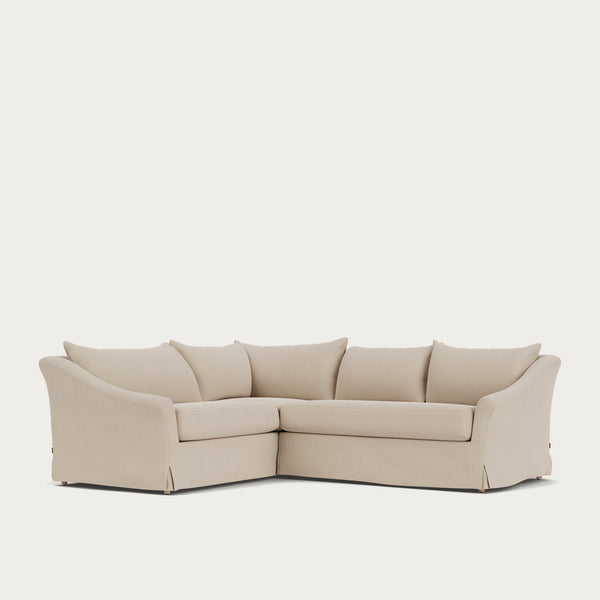
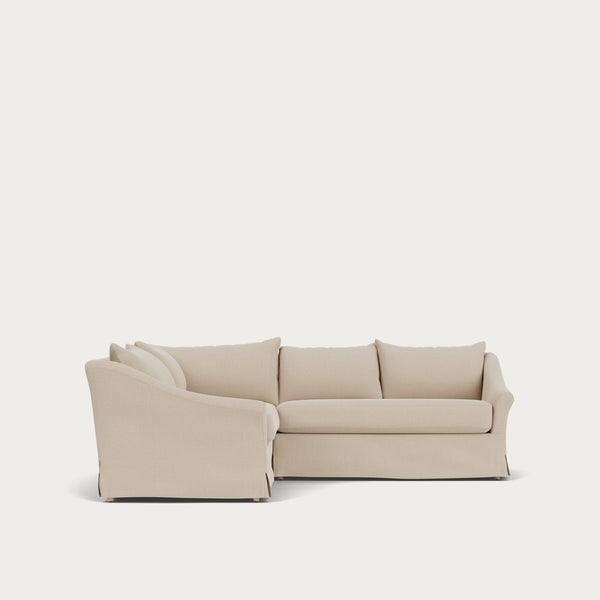
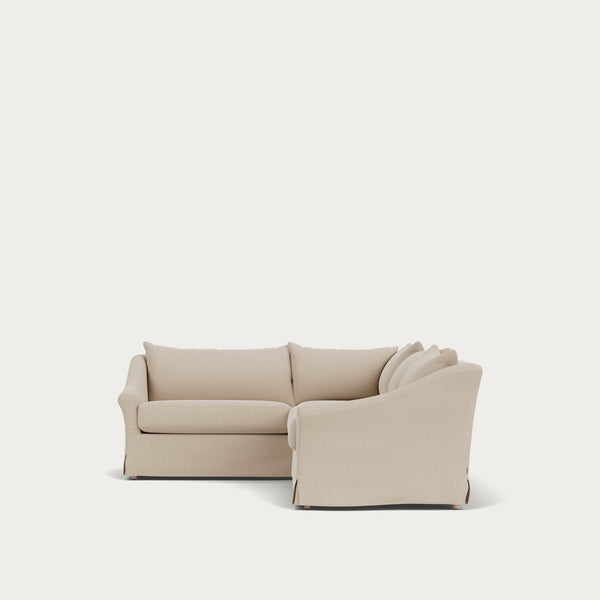
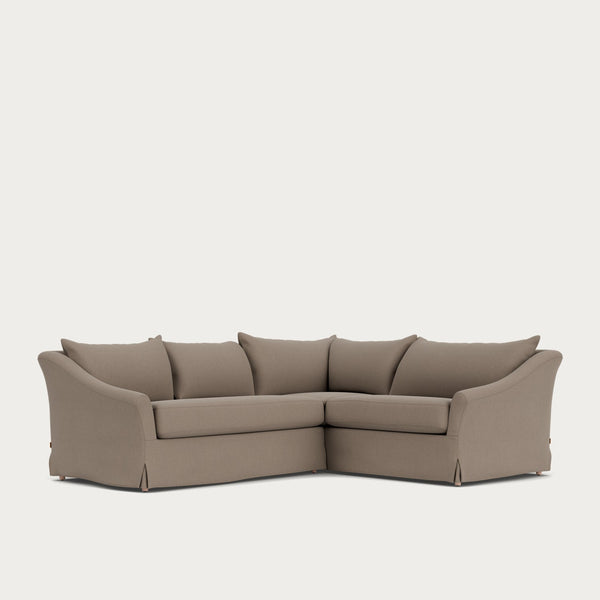
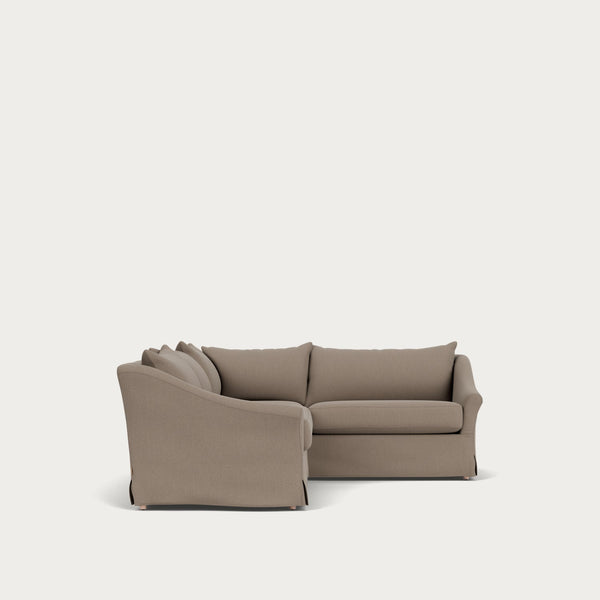
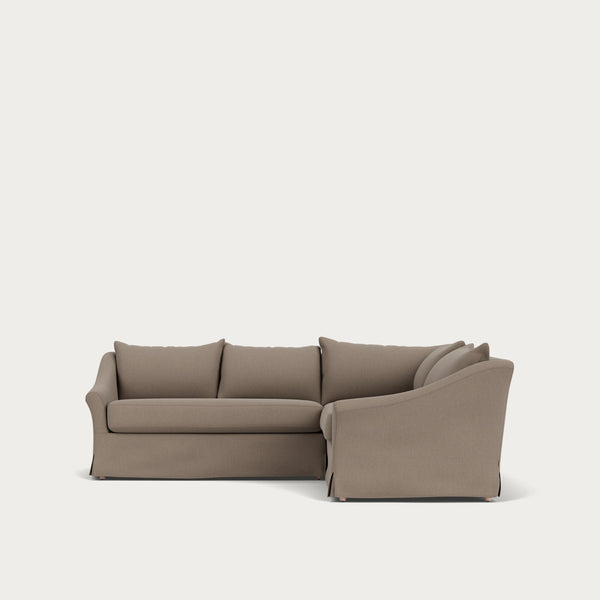
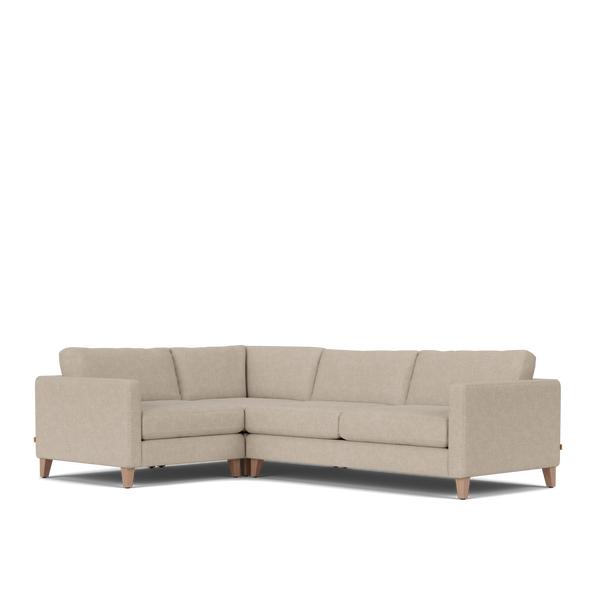
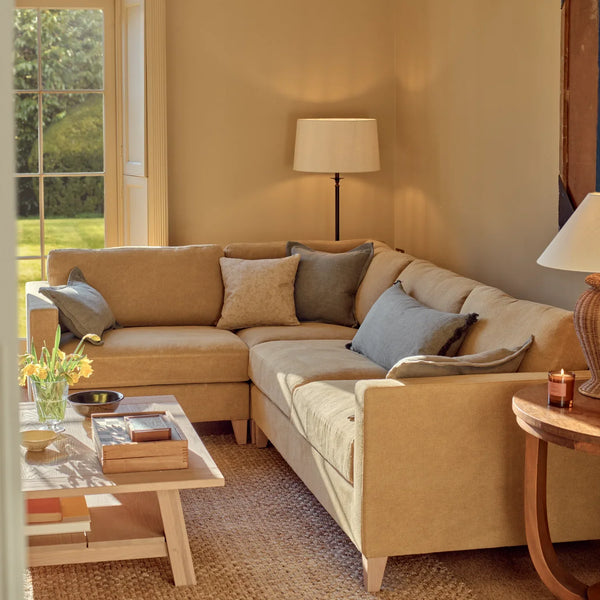
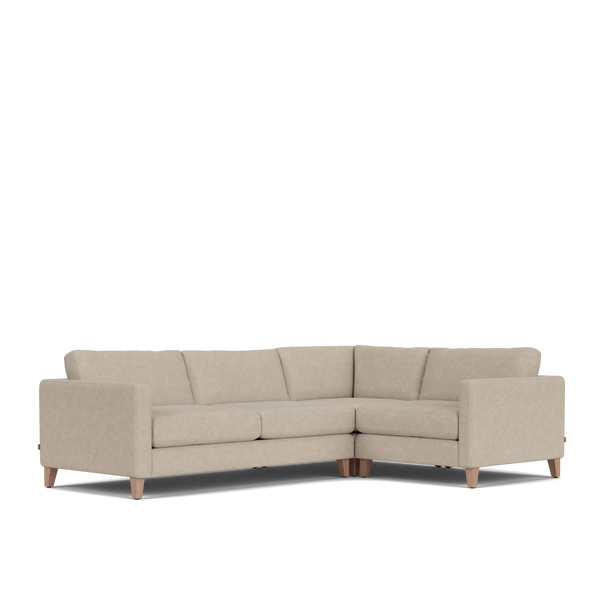
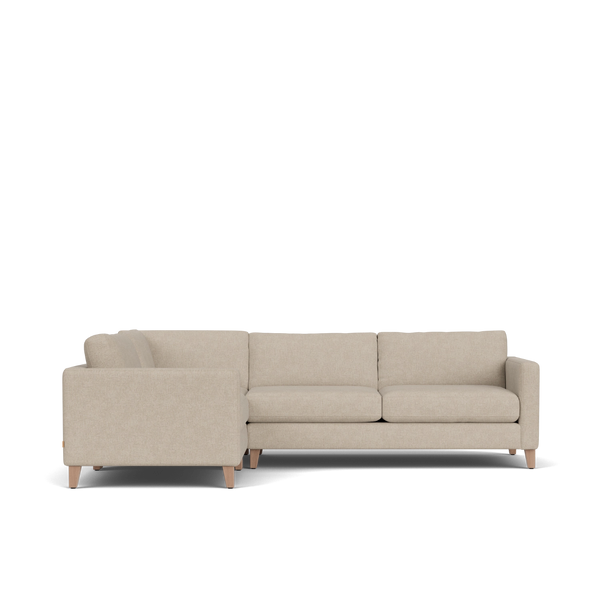
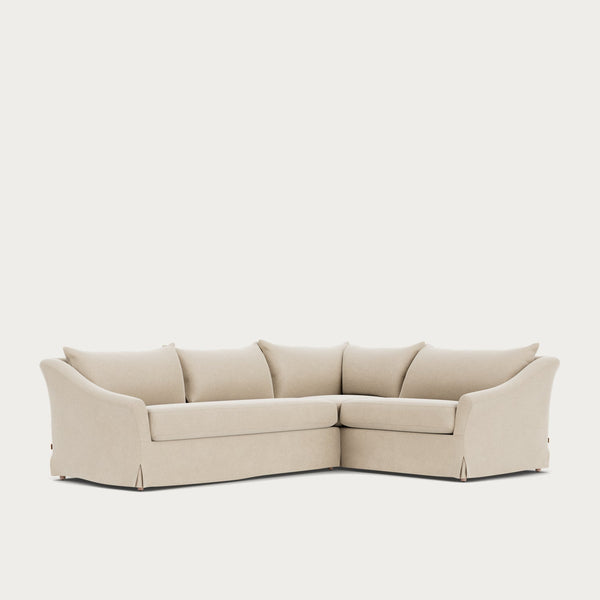
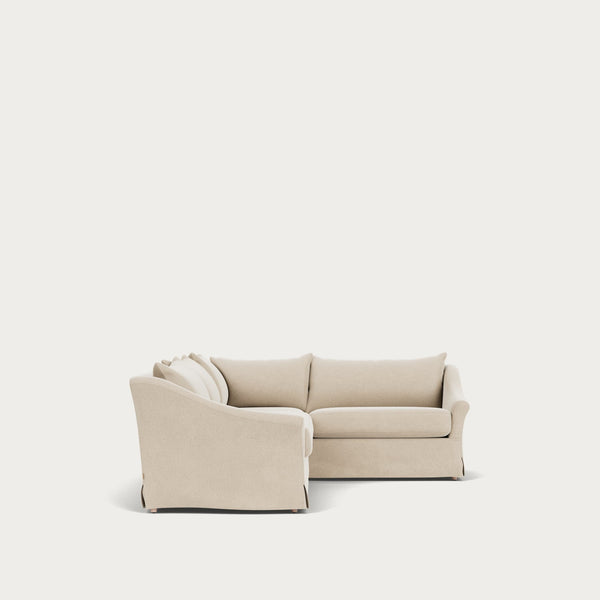
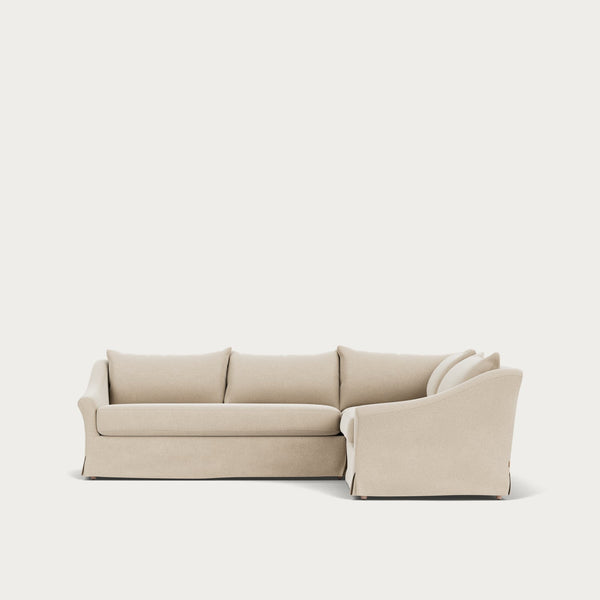
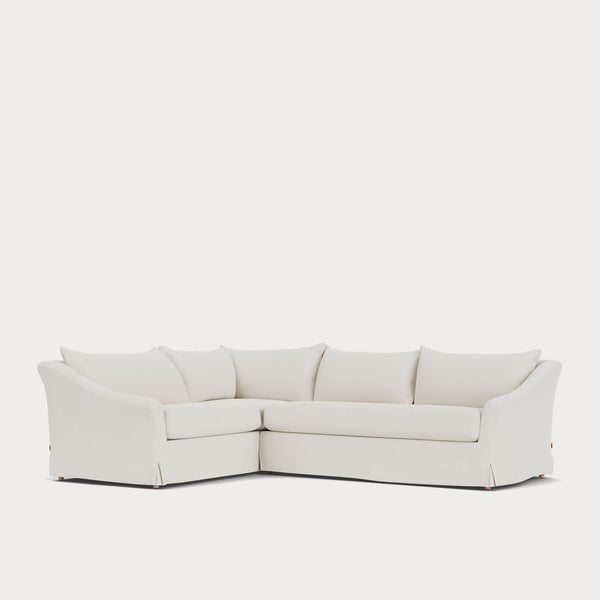
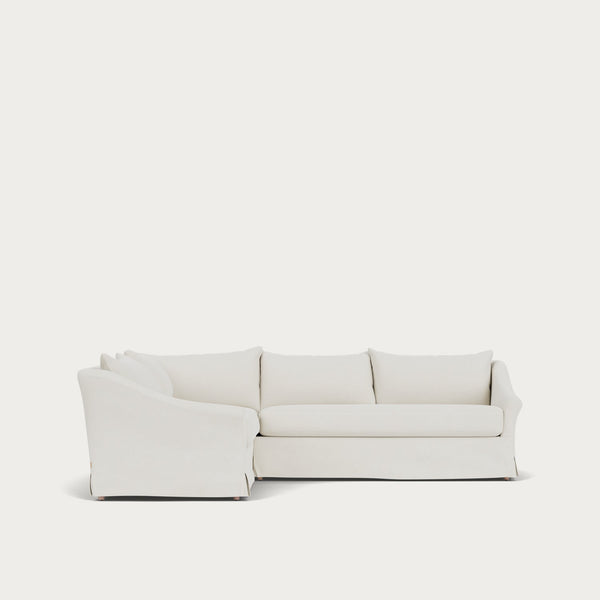
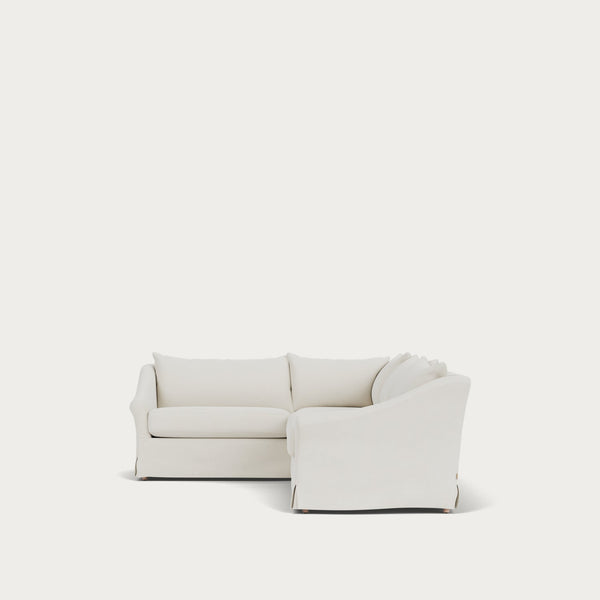
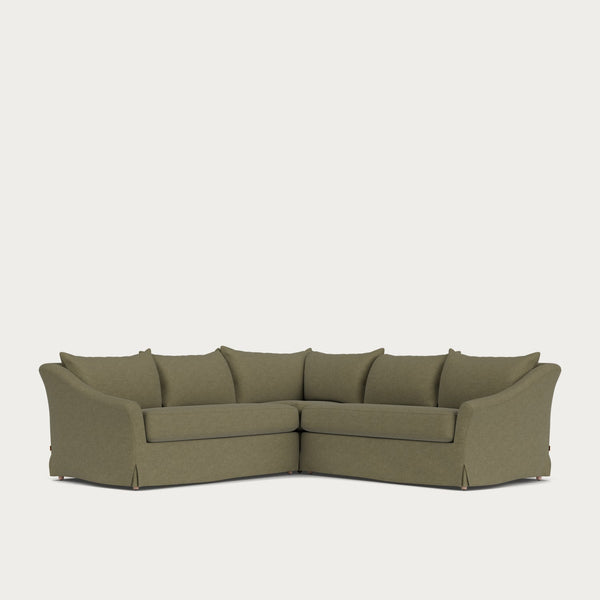
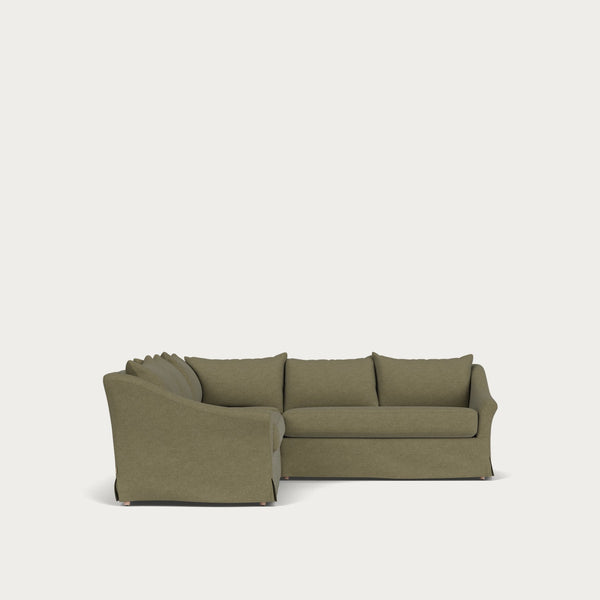
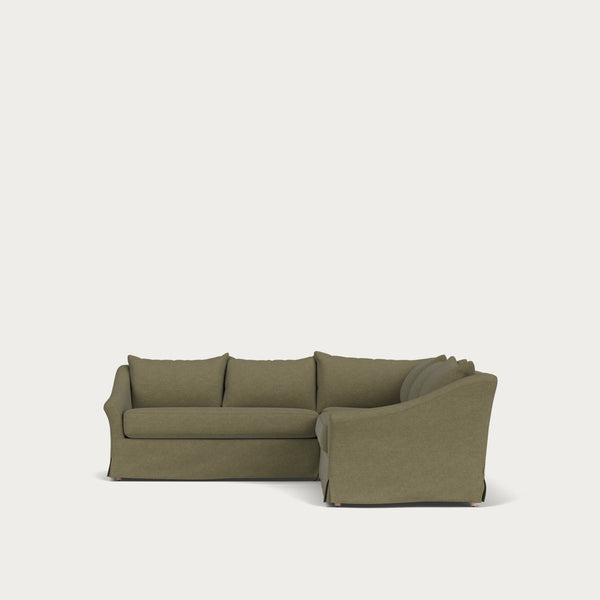
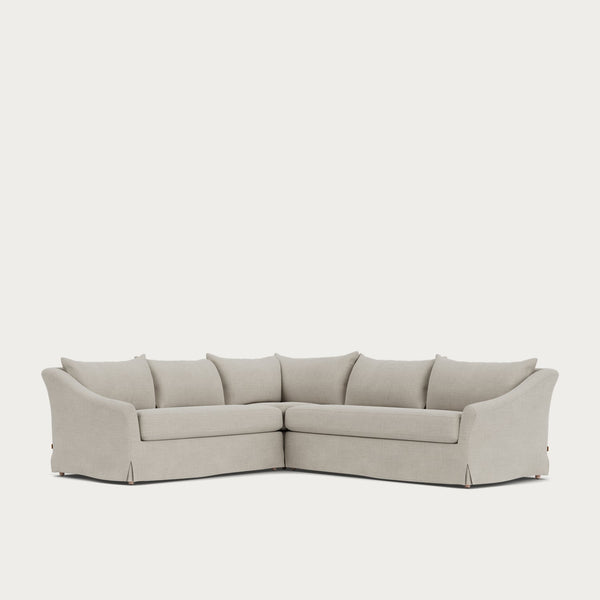
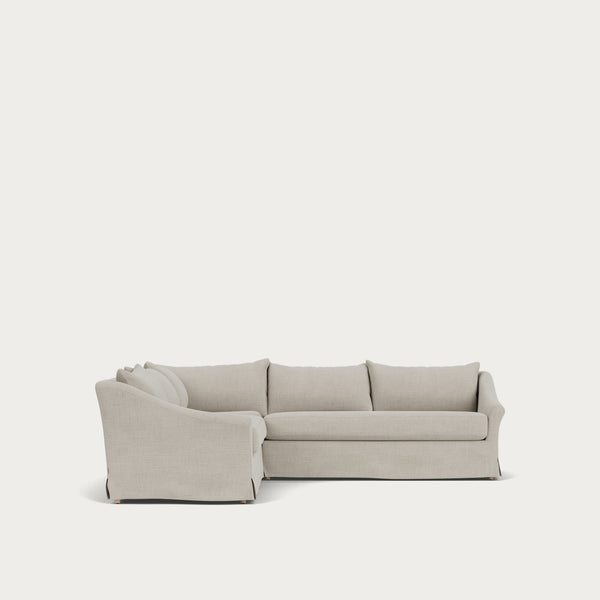
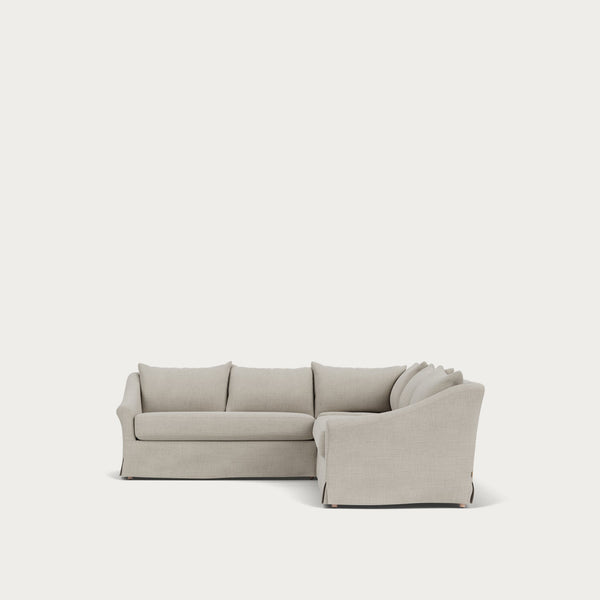
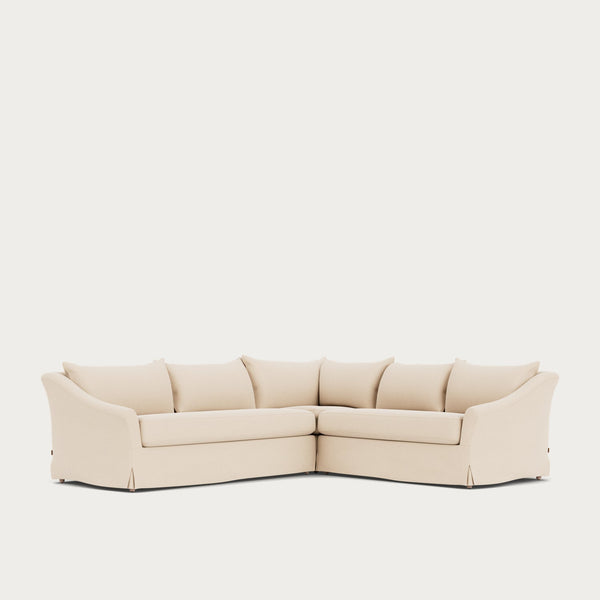
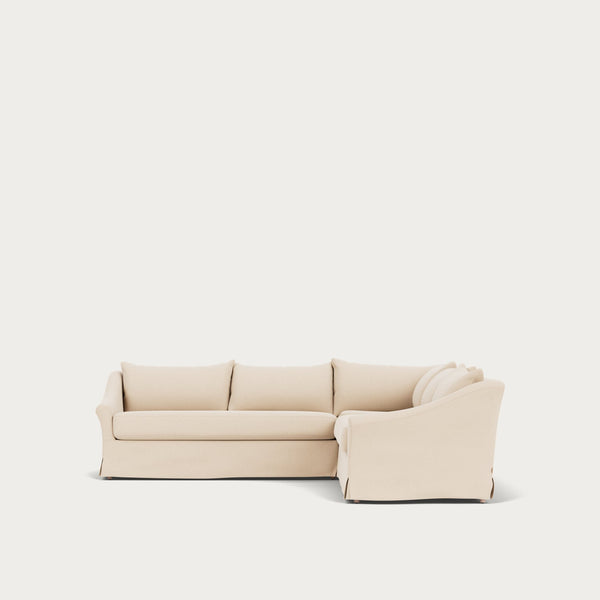
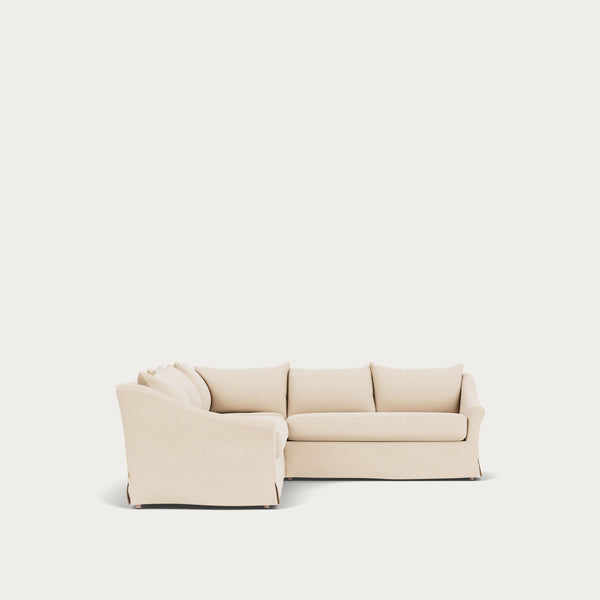
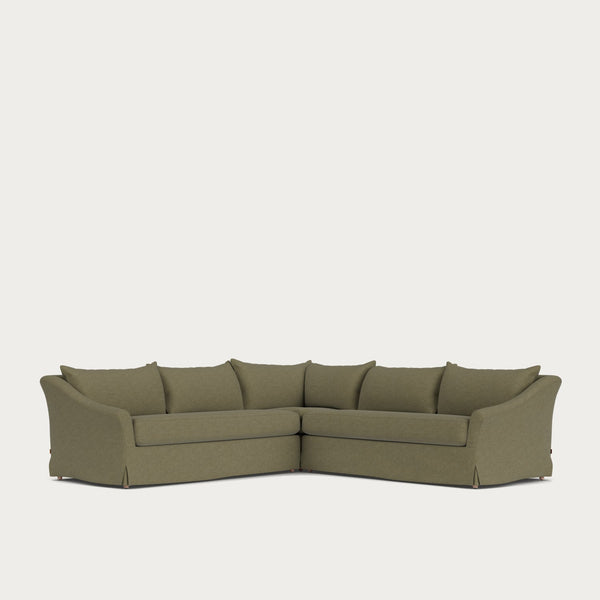
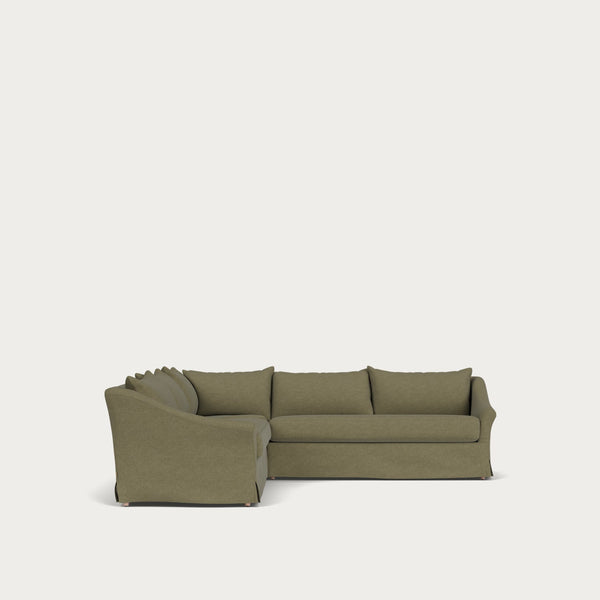
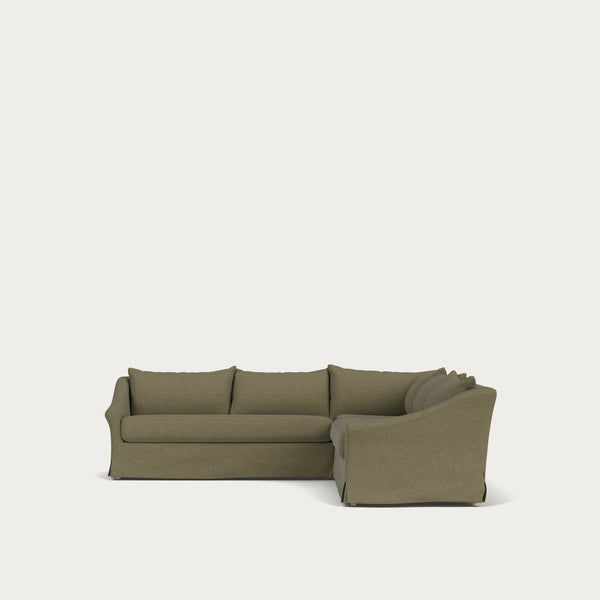
A corner sofa has to agree with the architecture of a room before it can be comfortable in it, so the shape is the first decision and the fabric is the second. Two shapes sit in this collection, and they behave differently. A square corner sofa has two returns of equal length meeting at a right angle, which is why the Long Island five-seater measures 260cm by 260cm. It settles into a corner symmetrically and reads as one continuous run of seating, with no left or right to it. An L-shape sofa has a long side and a shorter return, so it follows one wall and turns into the room only once. It carries a hand, and because it works off a single wall, it does not need the room to have a true square corner at all.
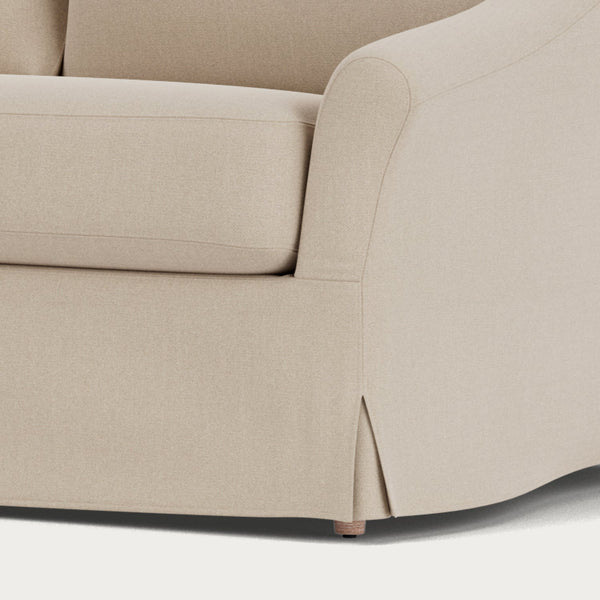
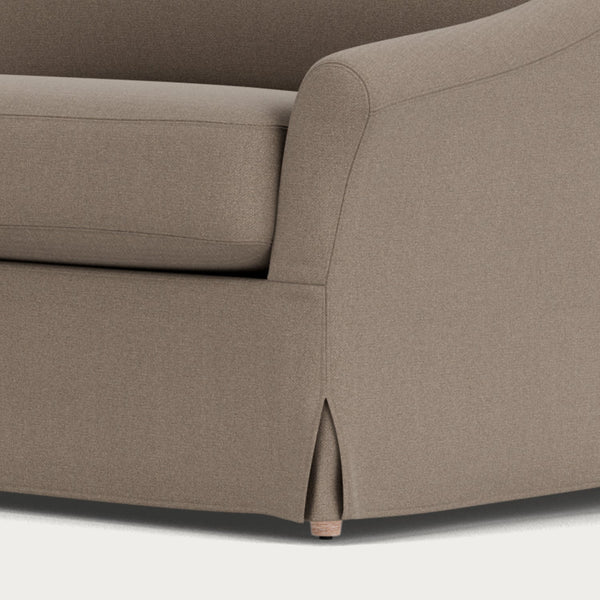
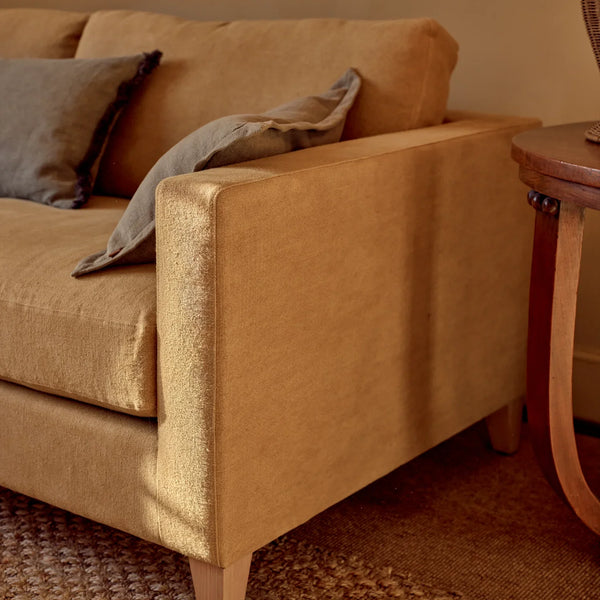
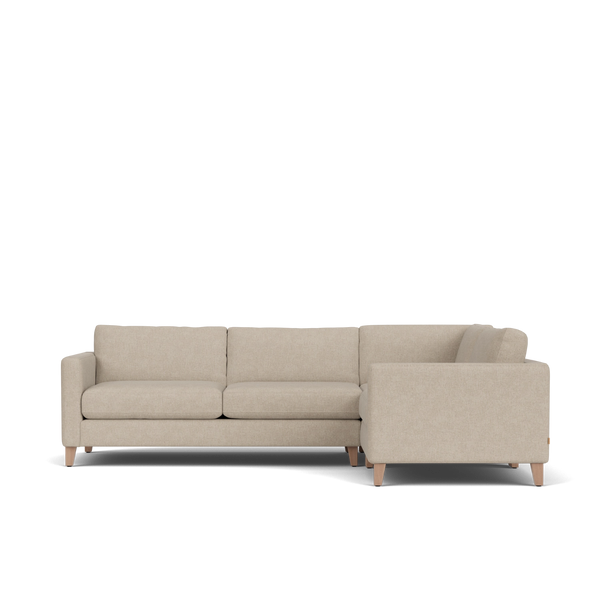
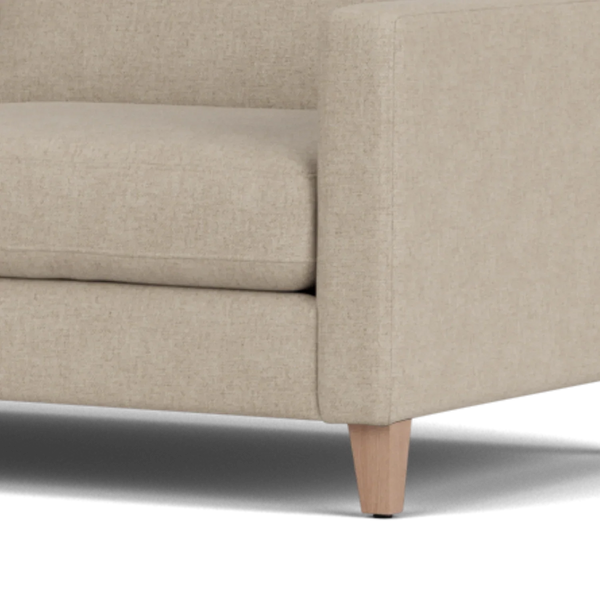
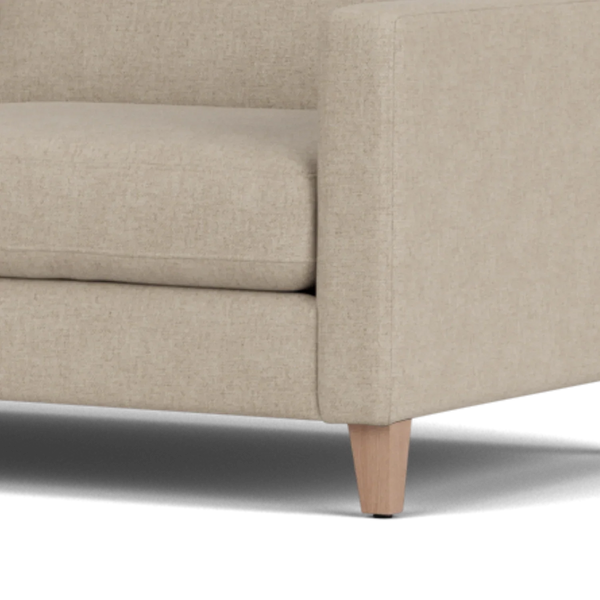
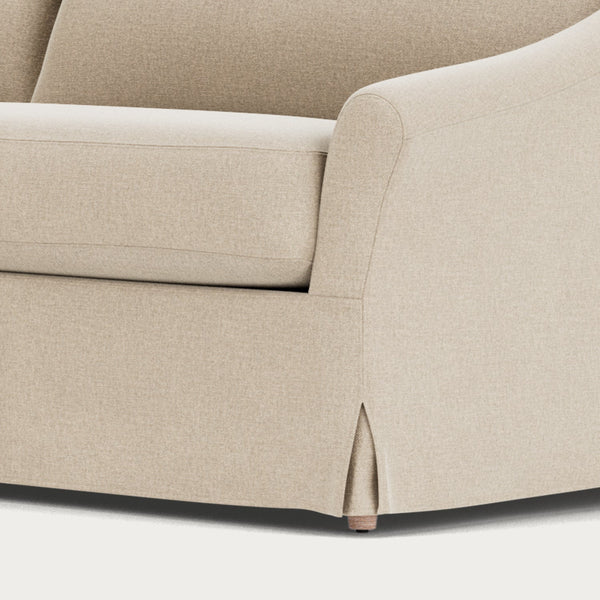
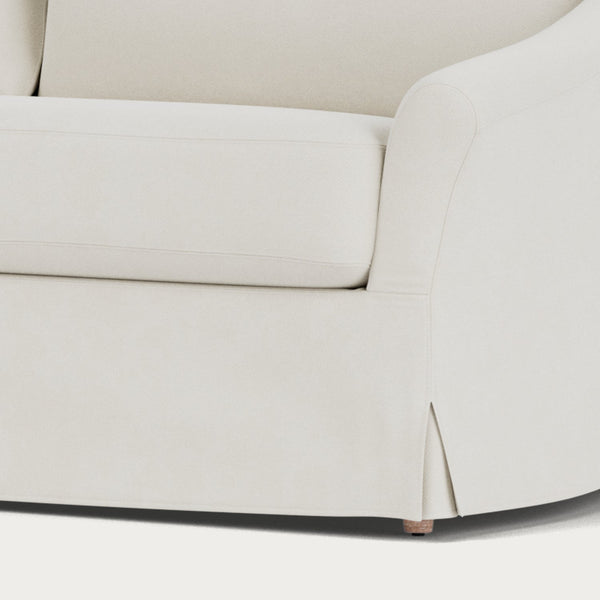
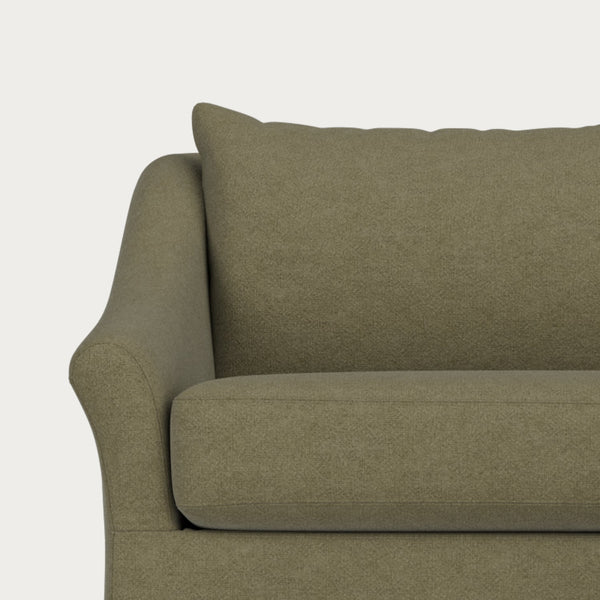
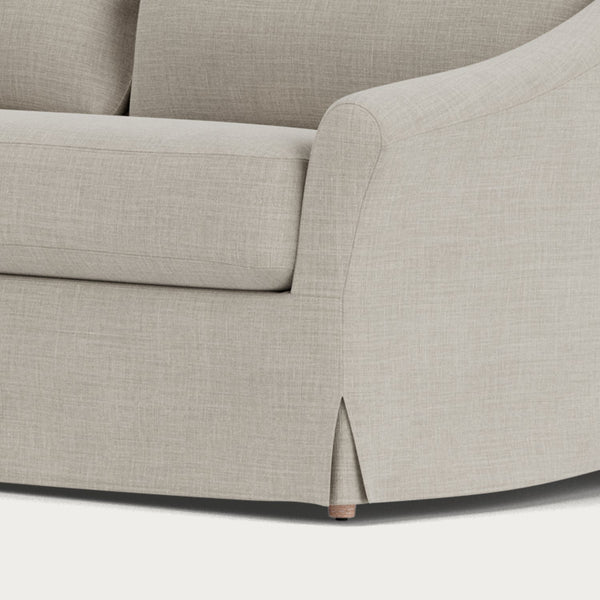
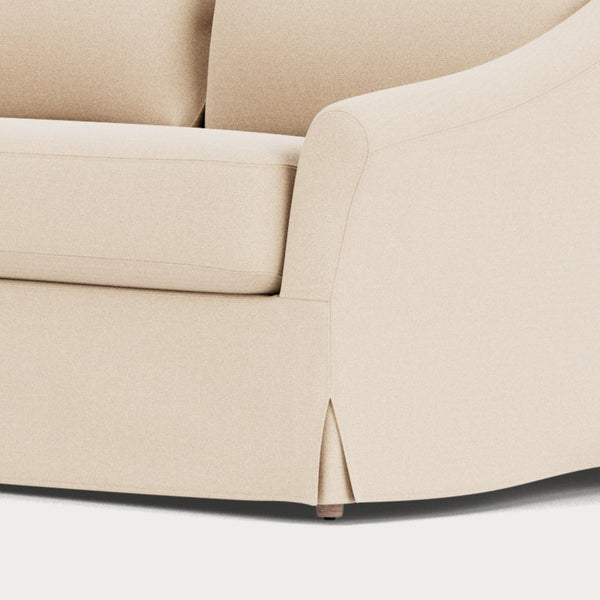
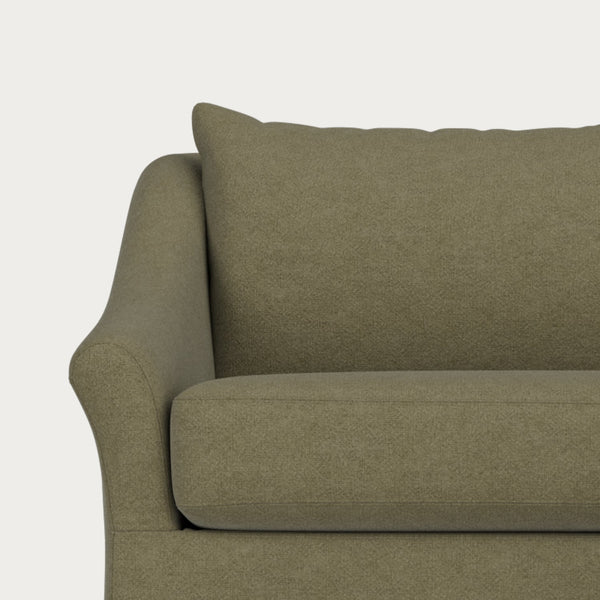
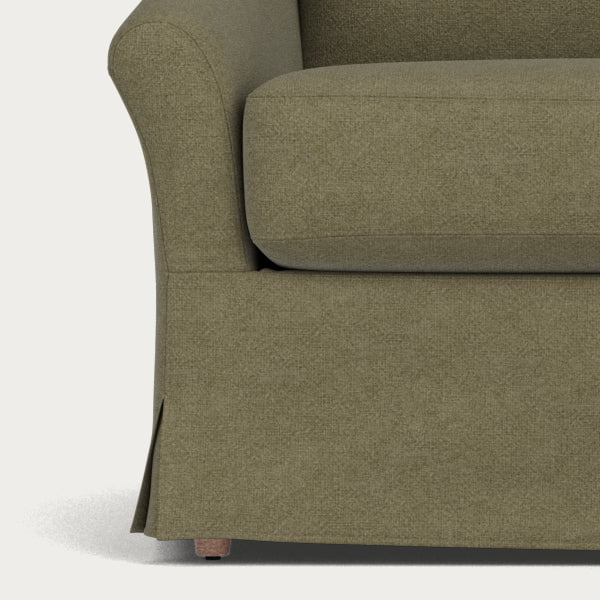
The two designs then ask different things of the space. The Long Island is the softer of them, with a 70cm seat depth, a low 59cm arm and a loose linen slipcover falling into a skirt with corner kick pleats, so it still reads relaxed at seven seats. The Shoreditch is the architectural one, clean-lined and full-armed, with square tapering oak legs, a taller 69cm armrest and a shallower 62cm seat that holds you more upright. Deep and unstructured, or tailored and contained, and worth settling before the size is. If the room wants the scale without the corner, our 4-seater sofas and 5-seater sofas cover the same ground in a straight line.
Which way a corner sofa should face
Where a corner sofa points is usually settled by what it must not block: a doorway, a window, a fireplace, or the route through to the next room. Our design director, Fred, advises against positioning a sofa with its back to a doorway, because the seat then feels exposed. Work out which wall the long side has to follow, and the hand follows from that.
A corner sofa also does not have to sit in a corner. Fred notes that L-shaped sofas are particularly good for helping re-shape a room, as they can make a long space feel more intimate. In a long, narrow sitting room, the move is to break the space in two with the sofa itself and a console table behind it, dressed with tall lamps or flowers so it adds height without shutting out the light. Used that way, the sofa becomes the room divider, and the wall it would otherwise have been pushed against is freed for shelves or art.
How our corner sofas are made
Both designs begin as a kiln-dried tulipwood frame, assembled and upholstered by hand, with birch plywood alongside the tulipwood on the Shoreditch. Traditional reinforced halving joints run through the frame, and serpentine springs carry the seat across its full width. Where a corner sofa differs from a straight one is that the Long Island is modular rather than a single object. It is made as separate modules fastened together with metal fixings, and every module has its own precision-made linen slipcover, secured on concealed wooden toggles. Inside, the back cushions are divided into pockets so the filling cannot migrate to the ends of a long run of seating.
The Shoreditch is upholstered as one fixed piece, on legs finished in Darkened Oak or Natural Oak. Both carry our guarantee: the frame and springs for life, with three years on the fabric and cushion inners. They are looked after the same way, and our textile care guide covers it.